Be yourself; Everyone else is already taken.
— Oscar Wilde.
This is the first post on my new blog. I’m just getting this new blog going, so stay tuned for more. Subscribe below to get notified when I post new updates.
Be yourself; Everyone else is already taken.
— Oscar Wilde.
This is the first post on my new blog. I’m just getting this new blog going, so stay tuned for more. Subscribe below to get notified when I post new updates.
Questions to ask yourself:
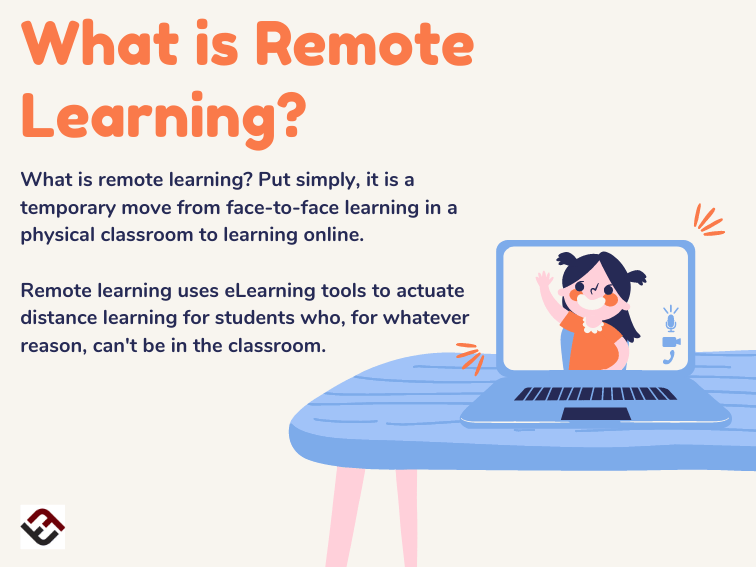
Remote learning definitely has its benefits and disadvantages. Remote learning is something that will never go away, even when face to face lessons are common again. For example, if there is a snow day and school gets canceled, teachers will most likely want to zoom or use google classroom instead to not fall behind. I wonder if snow days or school being canceled will become extinct ever since remote learning was introduced into our lives. Remote learning can be extremely exhausting for students and even teachers. Most will say that it is even more exhausting than going to class in person. Students and teachers are staring at screen for about six hours a day. This takes a toll on anyone causing a lack of motivation and exhaustion. Students have been finding it much more difficult to concentrate and pay attention when listening through a computer screen. Although, on the other hand, there are some advantages with remote learning. An advantage that I found with remote learning is how flexible it is. I think that most teachers have cut their students a bit more slack through remote learning because of how difficult it can be. Remote learning allows and teaching students to self-discipline. For example, students can learn to become more organized and committed to their academics through remote learning. It allows for better commitment skills along with time management.
An article that many should read is linked below. It is about a child psychiatrist and the health effects that remote learning has on students. You can find this article by clicking the link here. Before reading this article, I have not even thought about the many impacts that remote learning can have on one’s health. In this article, Dr. Dickerson (the psychiatrist) mentioned how a simple stop at a friend’s locker during school time is a detrimental part of the child’s growth. This allows for increasing social skills, making friends, and just gives the student a small break up from their school day. With remote learning, students do not have these special interactions. In fact, they probably are not having any interaction at all during this pandemic. Or at least not enough as they should be. This can drastically impact a child’s growth, especially with their social skills. I wonder if remote learning and isolation can cause a child to obtain social anxiety. Classroom structure is extremely important for students’ success as well. It allows students to focus and stay on task. Without this, students learning outcomes can quickly decline. There is so much screen time going on in a child’s life nowadays. A child will go to school (remotely) for about six hours a day. After this long period of screen time, they will most likely want to relax and have some time for themselves without thinking of school or homework. During this time, most children will either go on their ipads, tablets or watch T.V. This amount of screen time is extremely unhealthy for any human being. Never mind growing children. There has also been a huge uprise in parents seeking mental health services for their families. This is definitely caused by remote learning and all of the screen time that society is obtaining. I wish that there was an alternative for the amount of screen time students are obtaining. It is impacting children and other older student’s overall health greatly. Whether that be mentally or physically.
Here you can find an interesting ted talk about remote learning.
Martin Delany represents and explains racial inequality in the mid-nineteenth century in many ways. In chapter five, Means of Elevation, Delany had mentioned that they lived among men and also lived in a world that was conducted by men. “White men are producers-we are consumers. They build houses, we rent them. They raise produce, we consume it.” (Ch.5). Delany then goes on to explain that by these white men’s attributions to the world, they are huge contributors to authors and teachers of laws, medicine, science, religion, etc. This is basically all of the useful things that the world makes great use of. It almost emphasized the importance of these men and why they lived “among” them. Overall, this chapter was a very masculine and dominating text.
When Martin Delany represents Africa and the history of Africans, the tone has a more optimistic tone to it. He mentioned the “New World” and explained all of the opportunities that the African Americans can have once they have taken back control and are free again. He also explains the brutality that the slaves have been through and were still going through at the time. Chapter IV mentioned how he believed in universal equality, yet white people, especially men, still continued to predominate the rest of the world. Lastly, the means of elevations overall meant changing the means of the world. One must put in their greatest effort in order to make a solid change. In the novel, The Heroic Slave, Madison Washington’s strategies for equality were similar to each other but somewhat differed as well. They have both experienced the same pain and hurt and went to great lengths in attempts to make a change and do something about it. Although Madison Washington and Martin Delany wanted the same thing, they both went about it in different but bold and brave ways.
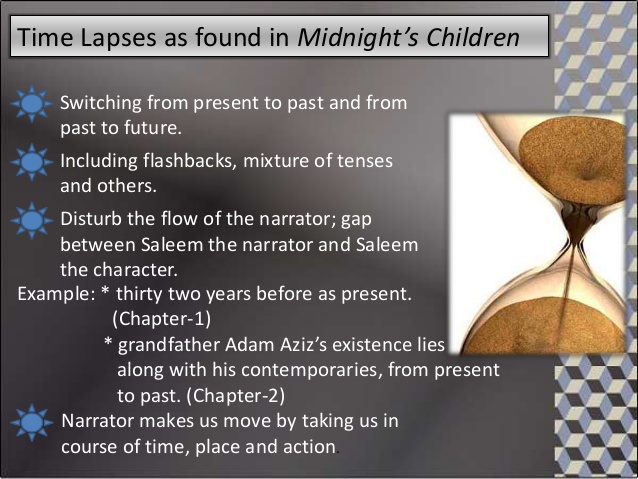
Throughout the novel, Midnight’s Children by Salman Rushdie, the time frame is scattered all over the place. It could often even be compared to a scattered time machine. The way that time works throughout the story is like no other, ranging from the past, the present, and the future. At times, parts of the novel can be hard to understand or even difficult to get a real grasp of what is going on. There are even points in the novel when Saleem says he may have mistaken a date or event due to his declining mental health. So, having that said, can we believe everything that Saleem says as a narrator? Does time control the characters or do the characters control the time?
I guess all I can say is that it is up to the reader whether or not they want to believe Saleem as a narrator. As the novel progresses, Saleem becomes more and more unreliable, even catching his own mistakes. “Rereading my work, I have discovered an error in Chronology. The assassination of Gandhi occurs, in these pages, on the wrong date.” (Page 190). Saleem admitting that he has made a mistake can lead readers to wonder if there are even more mistakes that he made that went unnoticed. Saleem could have easily told the story in the way that he felt fits best or how he expirienced it himself. Sometimes what people recall in their experience isn’t always how things actually went. Saleem also lacks a great amount of evidence to back up his claims which leaves it up to the reader whether or not they want to rely on his narration.
On the other hand, time does control everyone in the novel Midnight’s Children. The novel begins 32 years before Saleem was born. The entire novel spans for about 63 years, which means that the novel ends when Saleem is around 31 years old. The time span throughout this novel goes in all different directions. Up, down, side to side, you name it. The novel, Midnight’s Children by Salman Rushdie is clearly is a fragmented narrative constantly switching back and forth between the past and the present, and sometimes even the future. The story is often interrupted or broken up by Saleem making abrupt remarks on the side. In addition to this odd narrative and fragmentation, India itself is fragmented as well. India is divided into two disparate countries with the East and West sides of Pakistan (which are on either side of India). This shows the connection between the story and India’s history. As time goes on as Saleem tells his story, his body begins to crack and crumble which also signifies the history of India during the postcolonial times. You can see the parralells and connections between India’s history and the family history in Midnight’s Children by Salman Rushdie here:
http://www.eng.fju.edu.tw/Literary_Criticism/postcolonism/Mid_Children.htm
Interestingly enough, the middle of the novel is actually the beginning of Saleem’s life, or in other words, when he was born. As stated before, time controls everything and everyone in this novel. For example, if Saleem were to never be born at midnight on the night of India’s independence, he would have of never gained his powers. “‘A charming pose of Baby Saleem Sinai, who was born last night at the exact moment of our Nation’s independence the happy Child of that glorious Hour!'” (Page 133). The midnight’s child was a headline all over the papers. India believed that Saleem was a special and interesting person, but they had no idea what they were really in for. Most of the charachters in Midnight’s Children either live in the past or the present. Besides the old boatman named Tai. He is undeniably timeless. “Nobody could remember when Tai had been young. He had been plying this same boat, standing in the same hunched position, across the Dal and Nageen Lakes… forever. As far as anyone knew.” (Page 17). Tai was never seen as a younger or older guy. The people only knew Tai as himself, and have only remembered him as the version he is now and has always been. If Tai is timeless and was never remembered in any other way, could this be even more proof of Saleem being an unreliable narrator?
As many may already know, Saleem was switched at birth with Shiva, who is also apart of the Midnight’s Children gang. This switch happened when Saleem’s real father’s toe got shattered by a falling chair. Of course, nurses and others took care of him looking away from the two babies and their mothers for a brief moment. Due to the horrible timing of the stubbed toe and attention loss of the two babies and their mothers, the babies ended up being switched. This would have never happened if Ahmed did not stub his toe. “And when she was alone – two babies in her hands – two lives in her power – she did it for Joseph, her own private revolutionary act, thinking he will certainly love me for this, as she changed the name-tags on the two huge infants, giving the poor baby a life of privilage and condemning the rich born child to accordions and poverty…” (Page 130). Sadly, the mothers had no idea what had just happened. Saleem and Shiva were switched before they were even given back to their mothers by Saleem’s nanny, Mary Pereira.
Throughout the novel, Midnight’s Children by Salman Rushdie, the concept of time is an extremely important theme that is represented throughout the story. At times the concept of time can be confusing to the readers as it is easy to feel like Saleem is an unreliable narrator getting his time and dates wrong or mixed up. There sometimes is not enough proof to make the readers fully believe him. So, in the end, it is really up to the reader whether or not they want to fully believe Saleem and his side of things. This could also be why the novel is an extremely difficult read for some of the readers. The story follows the narrative plot for moments at a time, but for the characters time is inescapable and it controls everyone. The characters lives are so deeply connected to time to the point it is inescapable. But, if time is so flexible, how can it be so constraining at the same time?
This is an example post, originally published as part of Blogging University. Enroll in one of our ten programs, and start your blog right.
You’re going to publish a post today. Don’t worry about how your blog looks. Don’t worry if you haven’t given it a name yet, or you’re feeling overwhelmed. Just click the “New Post” button, and tell us why you’re here.
Why do this?
The post can be short or long, a personal intro to your life or a bloggy mission statement, a manifesto for the future or a simple outline of your the types of things you hope to publish.
To help you get started, here are a few questions:
You’re not locked into any of this; one of the wonderful things about blogs is how they constantly evolve as we learn, grow, and interact with one another — but it’s good to know where and why you started, and articulating your goals may just give you a few other post ideas.
Can’t think how to get started? Just write the first thing that pops into your head. Anne Lamott, author of a book on writing we love, says that you need to give yourself permission to write a “crappy first draft”. Anne makes a great point — just start writing, and worry about editing it later.
When you’re ready to publish, give your post three to five tags that describe your blog’s focus — writing, photography, fiction, parenting, food, cars, movies, sports, whatever. These tags will help others who care about your topics find you in the Reader. Make sure one of the tags is “zerotohero,” so other new bloggers can find you, too.
Have a WordPress.com account? Log in now.

